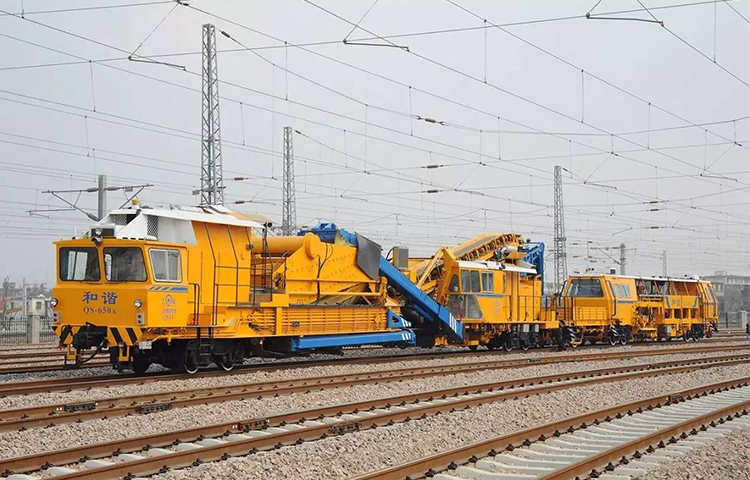
The QS-650 (RM 80) ballast cleaner is a critical piece of railway maintenance equipment in China, widely used for ballast cleaning operations on ballasted railway tracks. However, in actual operation, the problem of ballast scattering has consistently troubled both operators and maintenance personnel. Ballast scattering not only results in material waste but may also lead to severe safety issues, such as track distortion or even rail fractures, which pose threats to both operational efficiency and railway safety. Therefore, it is vital to analyze the root causes of ballast scattering in the QS-650 (RM 80) model and implement effective technical modifications.
Working Principle and Operating Modes of QS-650 (RM 80) Ballast Cleaner
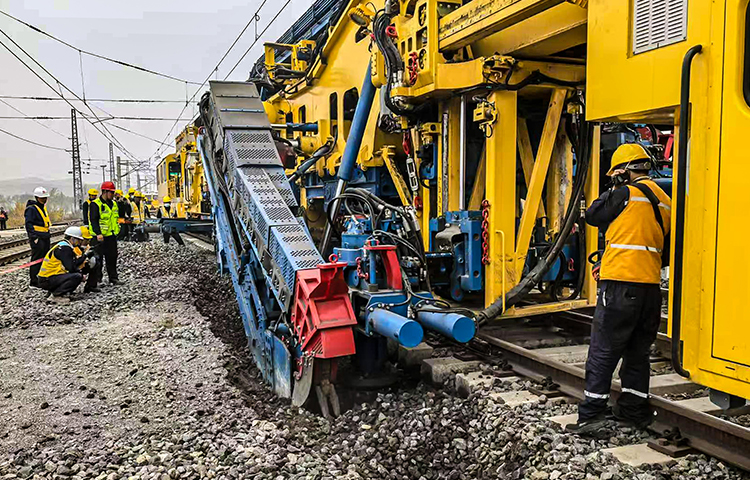
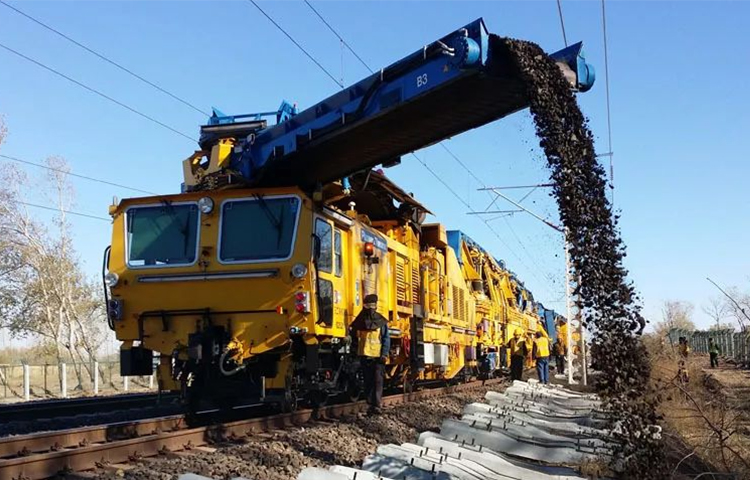
The QS-650 (RM 80) ballast cleaner is a large-scale maintenance machine powered by two air-cooled diesel engines and features full hydraulic transmission. Its main working components include an excavating device, a vibrating screen assembly, a ballast redistribution unit, a spoil conveyor, and a track-lifting unit. During operation, the machine moves slowly along the railway line, using excavating fingers mounted on the digging chain to scoop up fouled ballast from beneath the sleepers. The material is then transported via a guide chute to a vibrating screen for separation. Clean ballast is redistributed back to the track bed, while broken ballast, large stones, and dirt are discharged to the trackside or into a spoil wagon.
Depending on the position of the ballast flow gate, the machine operates in one of three modes:
1. Ballast Replacement Mode (Full Discharge) – All fouled ballast is diverted through the discharge chute.
2. Partial Ballast Replacement (Half Discharge) – Some ballast is screened and returned, while the rest is discharged.
3. Full Ballast Cleaning – All fouled ballast passes through the vibrating screen and clean material is returned.
 Analysis of Ballast Scattering Causes
1. Ballast Flow Gate Issues
The ballast flow gate controls the entry of fouled ballast into the vibrating screen or discharge conveyor. If the gate is damaged, worn, or deformed, the flow openings cannot be accurately regulated, causing fouled ballast to bypass screening and be directly discharged.
2.Poor Vibrating Screen Performance
The vibrating screen is the core component for separating clean and fouled ballast. If its mesh is damaged, clogged, or degraded, screening efficiency drops, and clean ballast may be mixed with oversized particles and discharged.
3.Inefficient Chute Design
The chute connects the vibrating screen to the spoil conveyor. If it is poorly designed—such as having insufficient height or incorrect mesh size—clean ballast can become stuck or mixed with spoil and wrongly discharged.
4.Lack of Operator Proficiency
Operator skills directly impact the machine’s performance. Inadequate knowledge of the equipment or incorrect coordination between excavation speed, screening speed, and traveling speed can cause operational mismatches and ballast scattering.
Technical Improvement Measures
1. Optimize Ballast Flow Gate Design
Perform regular inspections to ensure the gate is intact, not excessively worn, and free from deformation. Replace or repair damaged components in a timely manner to ensure accurate control of ballast flow according to operational needs.
2. Enhance Vibrating Screen Mesh Structure
Frequently inspect and clean the screen to prevent blockages. Replace worn or ineffective mesh layers, particularly the lower layers, with more durable and corrosion-resistant materials to improve screening efficiency and service life.
3. Redesign the Discharge Chute
Increase chute height and improve the fit between the chute and perforated plates to prevent blockages. Expand mesh openings to allow clean ballast to return smoothly to the track bed without mixing with fouled material.
4. Improve Operator Training
Strengthen operator training programs to ensure they are familiar with machine performance, operating modes, and workflows. Emphasize the coordination between excavation speed, screening speed, and travel speed to ensure effective teamwork among all systems and reduce ballast scattering.

Preventive Measures
To ensure long-term control of ballast scattering and reduce discharge rates, the following preventive strategies should be adopted:
1. Regular Inspection and Maintenance
Maintain all working components of the machine in good technical condition to ensure stable performance.
2. Real-Time Monitoring During Operation
Operators should continuously monitor the drive pressure of the vibrating screen and adjust speeds if abnormalities are detected.
3. Select Appropriate Operating Speeds
Maintain stable pressure in the hydraulic drive system of the digging chain to ensure optimal efficiency during operation.
4. Keep Vibrating Screen Level
Ensure the screen remains horizontally aligned, especially on curved track sections, by adjusting the leveling mechanism as needed.
Conclusion
By analyzing the causes of ballast scattering in the QS-650 ballast cleaner and implementing targeted technical improvements, the issue can be significantly reduced, leading to enhanced cleaning efficiency and safety. However, the maintenance and management of such complex machinery require continuous learning, experience accumulation, and ongoing optimization efforts by operators and maintenance teams to ensure the long-term safety and reliability of railway operations.

